Why hard floors make apartments louder
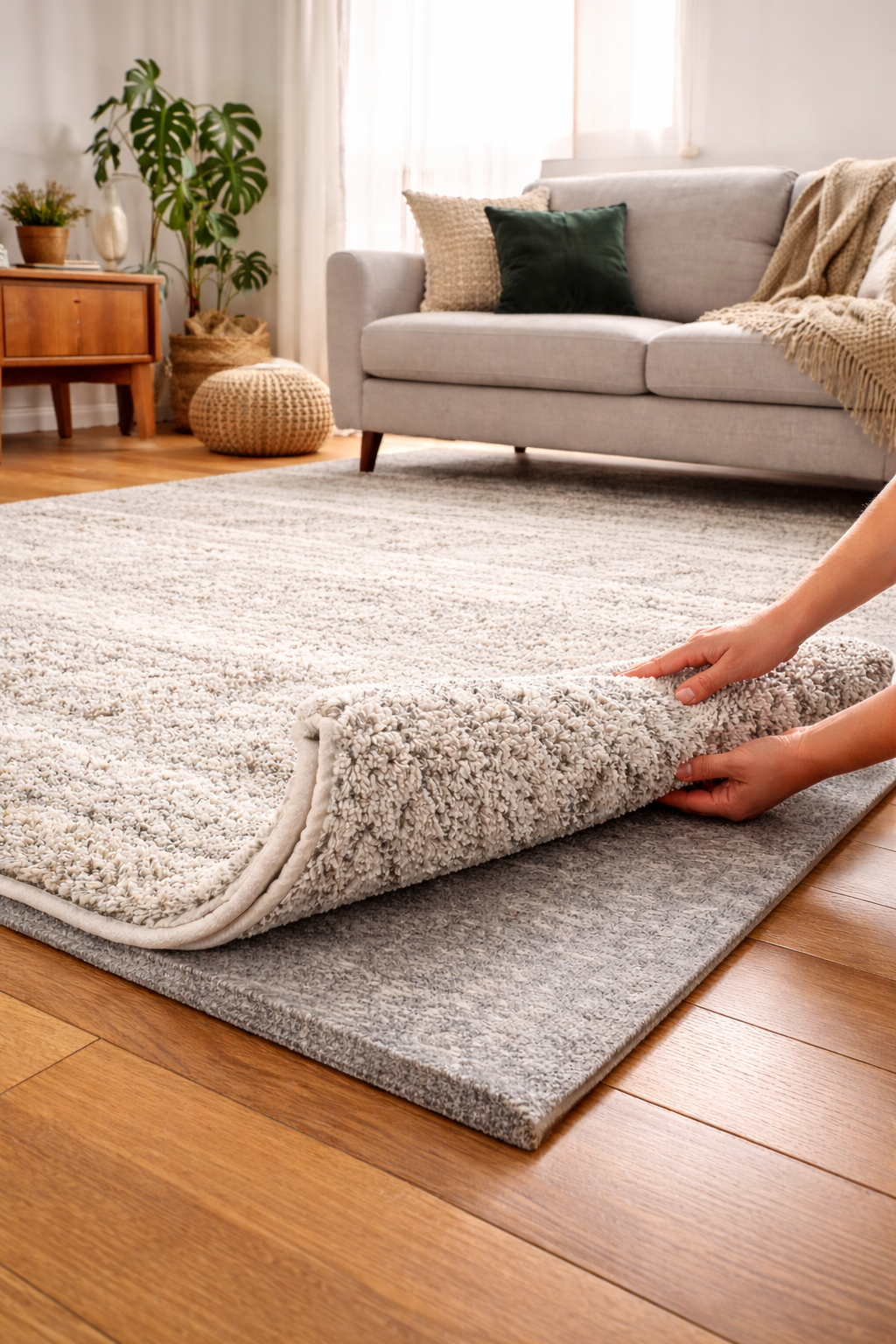
Hard floors reflect sound instead of absorbing it. That makes footsteps sharper and makes voices and TV noise bounce around the room, which creates that “empty” loud feeling. Adding soft surfaces helps reduce echo and makes the room feel calmer.
Rugs help a lot with footsteps—pair them with these renter-friendly upgrades: How to Soundproof a Room in an Apartment Without Drilling.
What rugs help with (and what they don’t)
Rugs help most with echo and footstep noise inside your room. They can also reduce how much impact noise travels downward to neighbors, especially with a good pad. But rugs won’t fully block loud bass or completely stop noise through walls—think of them as a strong comfort + noise-softening upgrade, not full soundproofing.
The best apartment-friendly rug and carpet methods
Rugs work best when you focus on thickness, coverage, and what’s underneath. These methods are renter-friendly and don’t require drilling or construction.
1. Use a thick rug (the thicker, the better)
A thicker rug absorbs more sound and reduces the “clap echo” you get with bare floors. Dense rugs generally perform better than thin, flat ones. If you’re choosing between two rugs, pick the one that feels heavier and more cushioned.
2. Add a rug pad underneath (big difference)
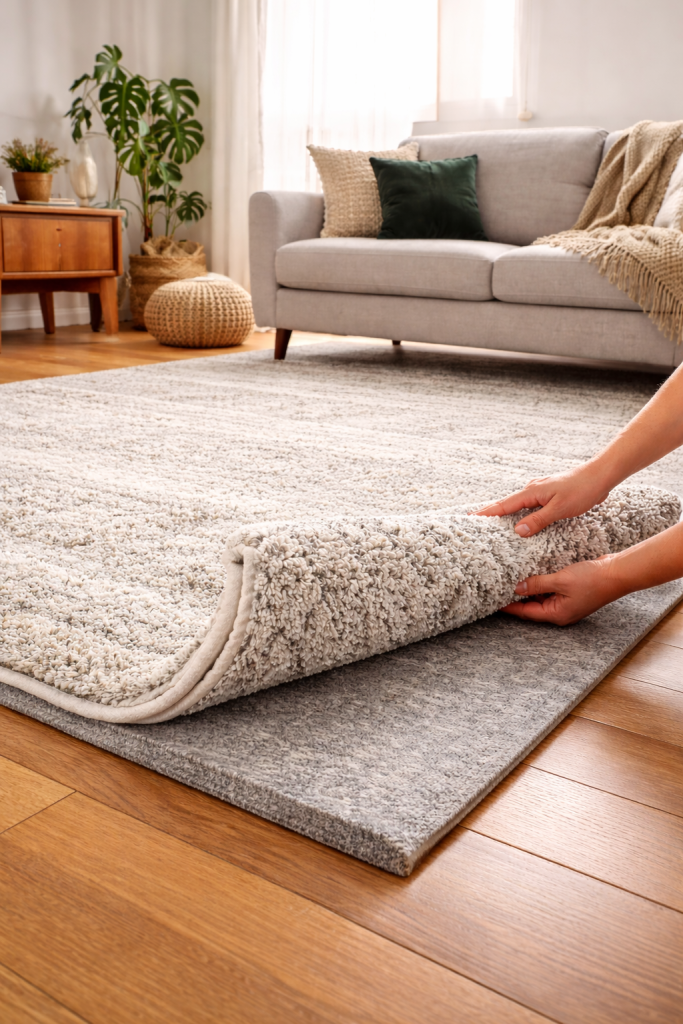
A rug pad is one of the easiest upgrades that actually changes how a room sounds. It adds cushioning, reduces impact from footsteps, and helps the rug absorb more sound. Even a normal rug feels quieter and softer with a pad under it.
3. Cover the high-traffic areas first
You don’t need to carpet your whole apartment to notice an improvement. Start with the areas where noise happens most—like hallways, the living room walking path, next to the bed, or under a desk chair. Covering the main walking zones usually gives the fastest results.
4. Layer rugs for extra noise control
Layering adds thickness, and thickness helps. A simple way is placing a smaller thick rug on top of a larger flat rug. This works great in a living room or bedroom and helps reduce both echo and footstep noise.
5. Use carpet tiles for renters (removable option)
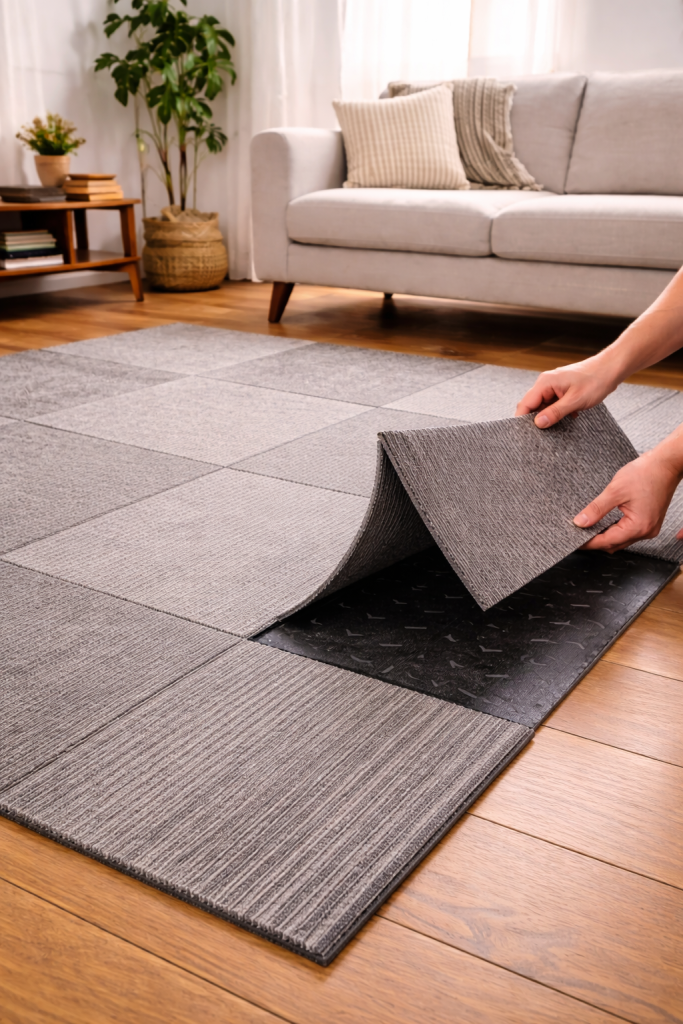
If you want more coverage without installing carpet, removable carpet tiles can help. They won’t be as plush as a full carpet and pad, but they can reduce echo and soften footstep noise—especially in office areas or along walking paths.
Common mistakes to avoid
A common mistake is buying a thin rug and expecting it to make a huge difference. Another one is skipping the rug pad—pads matter more than people think. Also, placing a rug only under a coffee table but leaving the walking path exposed usually won’t change the noise much.
If your room still feels loud after adding rugs, you may need wall treatment too—see acoustic panels for reducing echo.
How much noise reduction you can realistically expect
Rugs and pads can make a room feel noticeably quieter by reducing echo and softening footsteps. You’ll usually notice the biggest change in rooms with hard floors, high ceilings, or lots of empty space. They won’t erase loud music or deep bass from neighbors, but they can make everyday noise less sharp and less annoying.
Conclusion
If you want a renter-friendly way to reduce noise, rugs and carpets are one of the easiest upgrades. Focus on thickness, add a rug pad, and cover the areas you actually walk on. Even simple changes here can make your apartment feel quieter and more comfortable.
For the best results, combine rugs with door and wall fixes: how to soundproof a door in an apartment and how to soundproof a wall apartment-friendly options that work