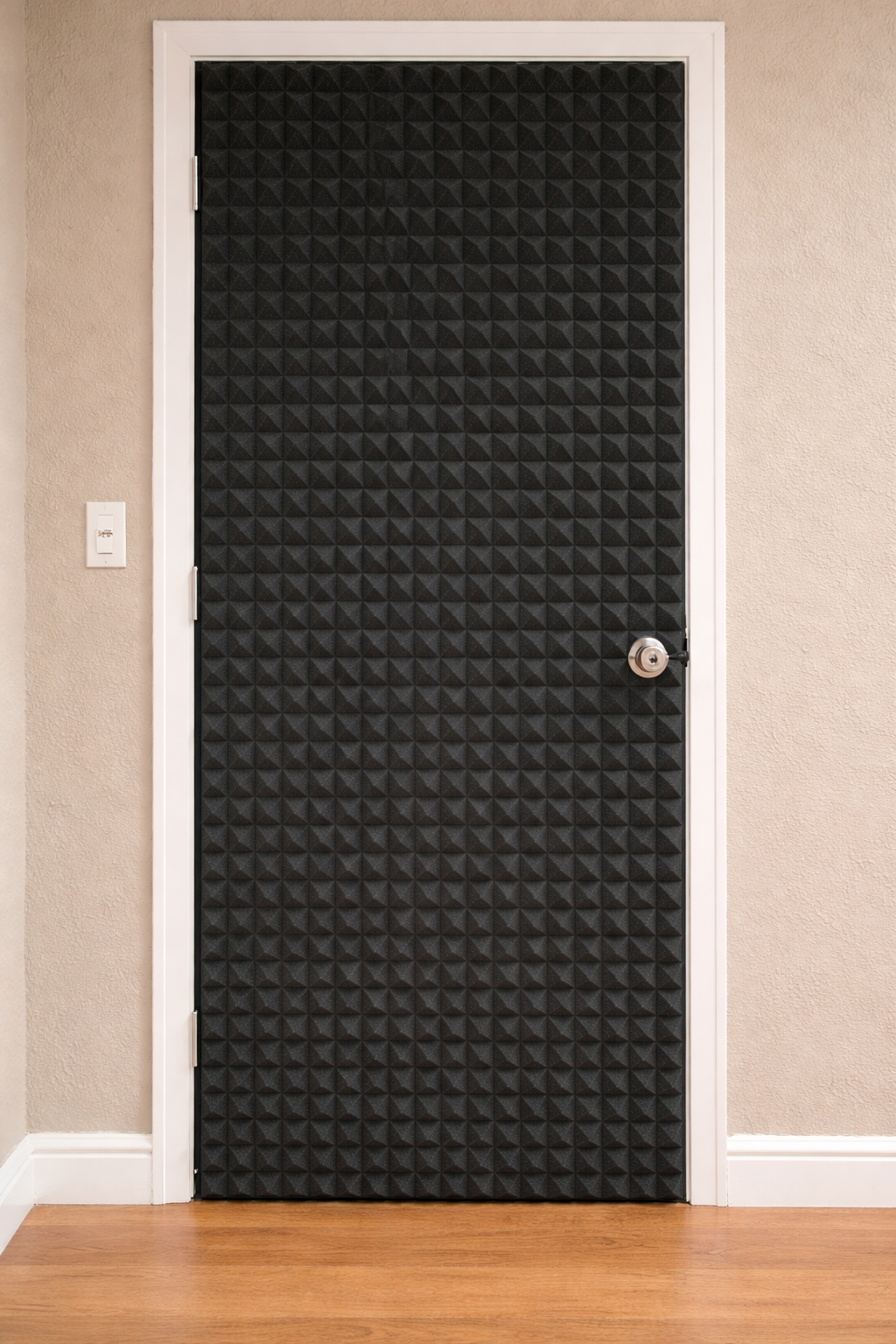
If you live in an apartment, your door is probably one of the biggest sources of noise. Hallway sounds, neighbors, footsteps, talking, and even elevator noise often come straight through thin apartment doors.
The problem is that most apartment doors are hollow and full of gaps, which makes them terrible at blocking sound. And since drilling or replacing the door usually isn’t allowed, you need renter-friendly solutions.
In this guide, we’ll cover what actually works to soundproof a door without drilling, what doesn’t, and how much noise reduction you should realistically expect.
Why apartment doors are so bad at blocking sound
Most apartment doors are hollow-core doors. They’re lightweight, cheap, and easy for buildings to install — but terrible for soundproofing.
On top of that, there are usually:
- Gaps under the door
- Gaps around the frame
- Thin materials that let sound pass straight through
Sound doesn’t need a big opening to get through. Even small cracks can let a surprising amount of noise leak into your room.
The best ways to soundproof a door without drilling
1. Door draft stopper
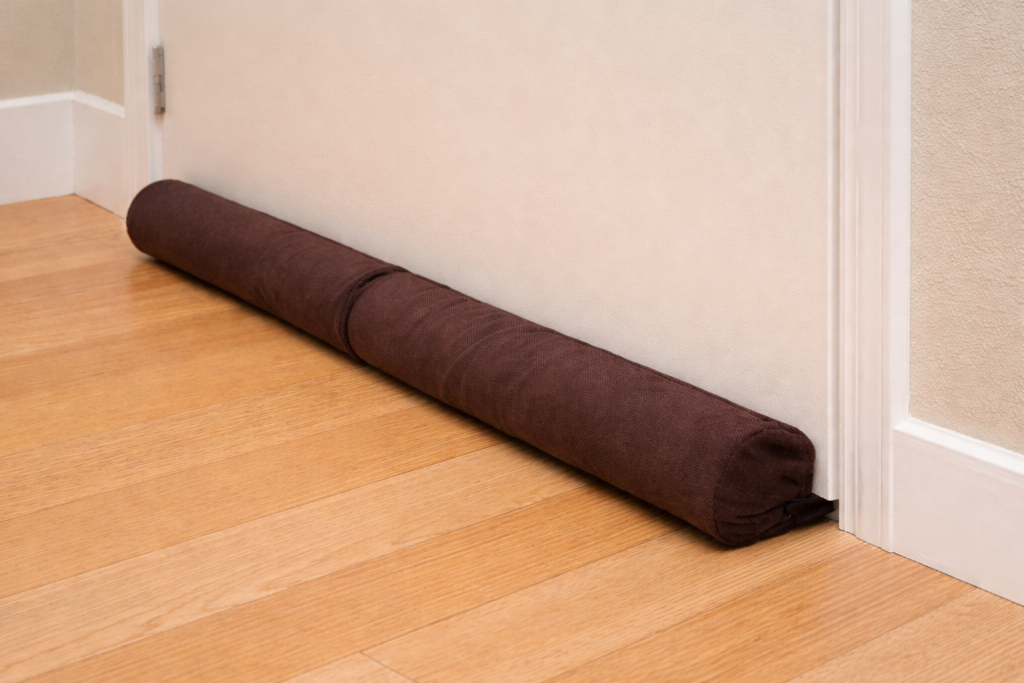
A lot of noise enters through the gap under the door. A door draft stopper blocks that gap and stops both sound and air from coming through.
This is one of the cheapest and easiest upgrades you can make, and it actually works well for hallway noise and voices.
2. Weather stripping
Weather stripping seals the gaps around the sides and top of the door frame.
Even small cracks around the frame can let in a lot of sound. Sealing them can make a noticeable difference, especially for voices and higher-pitched noise.
It’s cheap, removable, and perfect for renters.
3. Door soundproofing blanket or curtain
Hanging a thick blanket or curtain over the door adds mass, which helps block sound passing through the door itself.
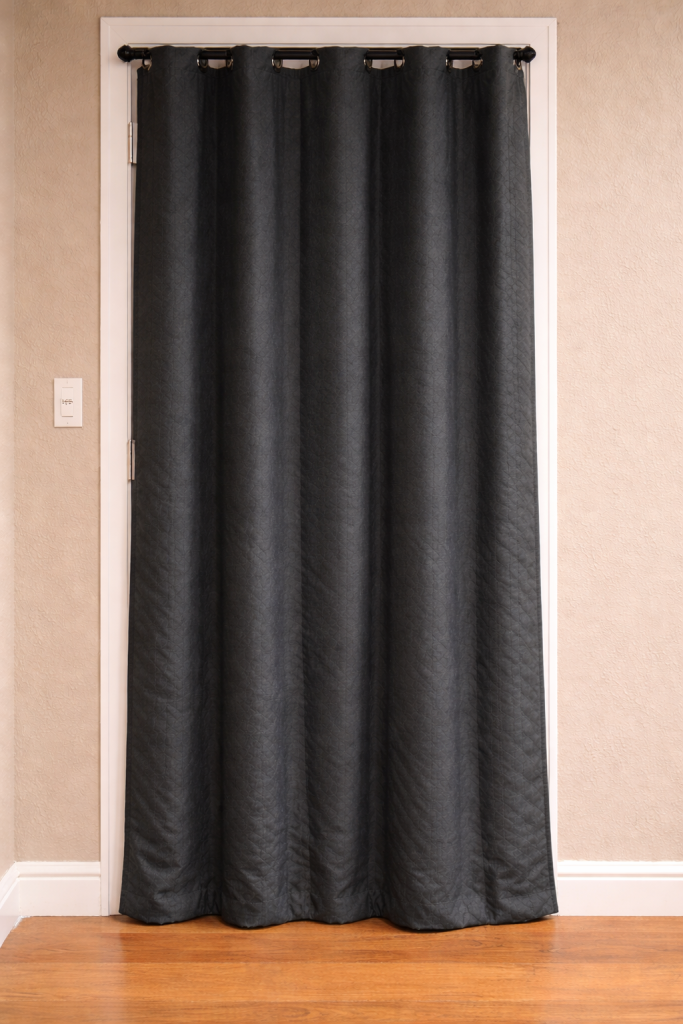
This won’t completely silence your room, but it can noticeably reduce noise coming through thin doors.
4. Mass loaded vinyl (removable)
Mass loaded vinyl (MLV) is a heavy, dense material designed to block sound.
You can hang it over the door using hooks or removable adhesive strips. It works better than blankets, but it’s more expensive and heavier.
5. Foam panels on the door
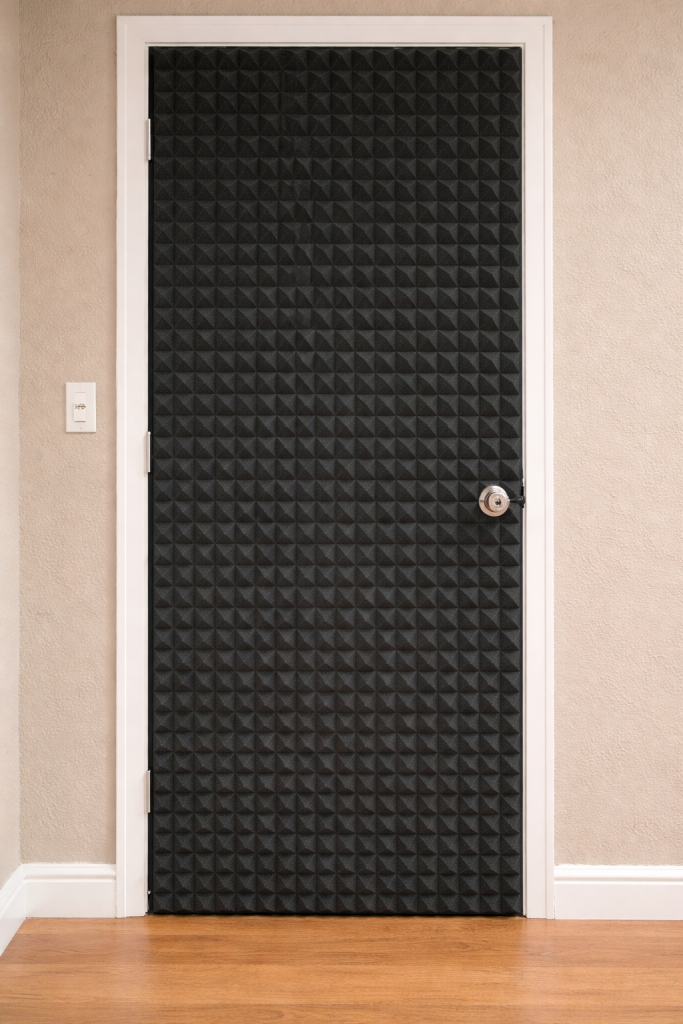
Foam panels help reduce echo and soften sound inside your room, but they do not block much noise from entering.
They can slightly help with high-frequency noise, but they are not a true soundproofing solution on their own.
6.Sealing the door frame gaps
Even if you treat the door itself, sound will still leak through gaps around the frame if they’re not sealed.
Combining weather stripping, a door sweep, and corner seals gives you the best overall result.
What actually works vs what doesn’t
Works best:
- Sealing gaps (draft stoppers + weather stripping)
- Adding mass (blankets or MLV)
Does NOT work well by itself:
- Foam panels
- Thin decorative panels
Foam is for echo control, not real sound blocking.
How much noise reduction you can realistically expect
With renter-friendly methods, you should expect:
- Noticeably less hallway noise
- Voices and TV sounds reduced
- But not complete silence
True soundproofing requires construction — but these methods can make your room much more livable.
Better alternatives if the noise is severe
For a full room solution, read our complete guide on how to soundproof a room in an apartment without drilling.
Conclusion
Apartment doors are one of the weakest points when it comes to noise. While you can’t fully soundproof a door without construction, sealing gaps and adding mass can make a big difference.
If you want a complete, renter-friendly strategy for reducing noise in your whole room, check out our full guide on
how to soundproof a room in an apartment without drilling.

Leave a Reply