
Living in an apartment means sharing walls, floors, and ceilings with other people. Unfortunately, that also means sharing noise. Whether it’s loud neighbors, traffic, or roommates, noise can make it hard to sleep, work, or relax. The good news is that you don’t need to drill holes or damage your walls to make your room quieter. In this guide, I’ll show you practical ways to soundproof a room in an apartment without drilling or breaking your lease.
Why drilling isn’t an option for most renters
Most apartments don’t allow permanent modifications like drilling into walls or ceilings. Even if you’re allowed to, you might lose your security deposit or be forced to repair the damage when you move out. That’s why no-drill soundproofing methods are so popular. They’re removable, cheap, and renter-friendly.
If noise is coming through a shared wall, read our guide on how to soundproof a wall apartment-friendly options that work
The best no-drill soundproofing methods
1. Door draft stoppers
A lot of noise enters through gaps under doors. A simple door draft stopper can block both sound and air. These are cheap, easy to install, and surprisingly effective for reducing hallway noise.
If hallway noise is your main problem, check out our full guide on how to soundproof a door in an apartment.
2. Weather stripping
Weather stripping is one of the cheapest and most effective ways to reduce noise leaking through doors and windows. Small gaps around frames let a surprising amount of sound in. By sealing these gaps, you block both noise and air. It’s easy to install, removable, and perfect for renters.
3. Thick curtains

Thick, heavy curtains help absorb sound and reduce echoes inside your room. They work especially well over windows or even on walls that face noisy neighbors. While they won’t fully soundproof a room, they can noticeably reduce outside noise and make the room feel quieter.
4. Rugs and carpets
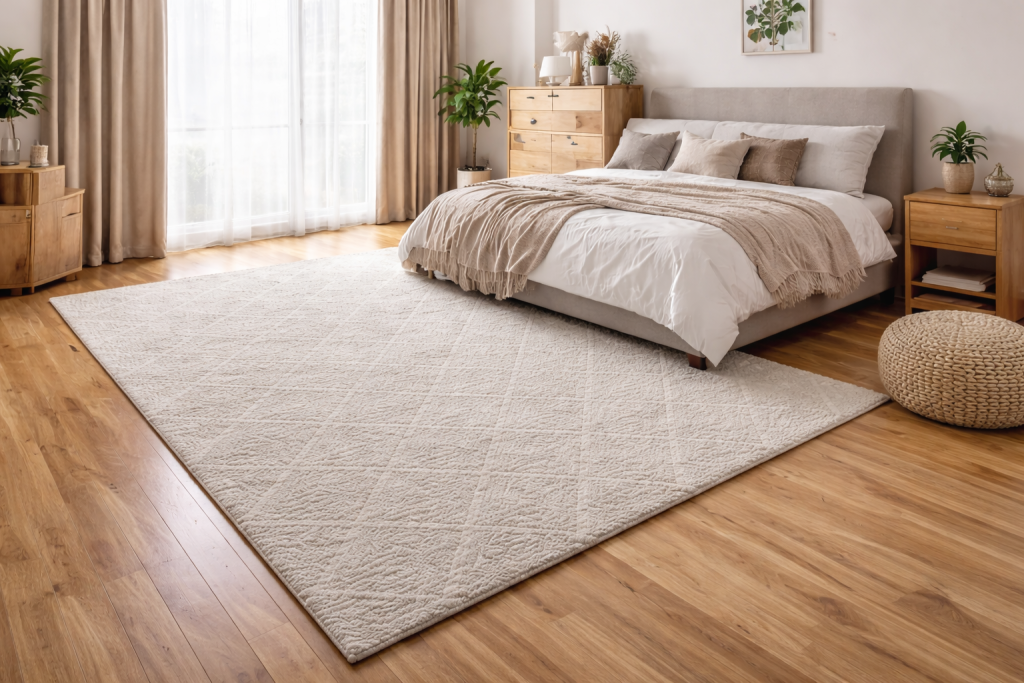
Hard floors reflect sound, which makes a room louder and more echoey. Adding rugs or carpets helps absorb sound and reduce how much noise travels through the floor. This is especially helpful if you have neighbors below you or live in an apartment with thin floors.
For a full guide, read: How Rugs and Carpets Reduce Noise in an Apartment.
5. Removable foam panels
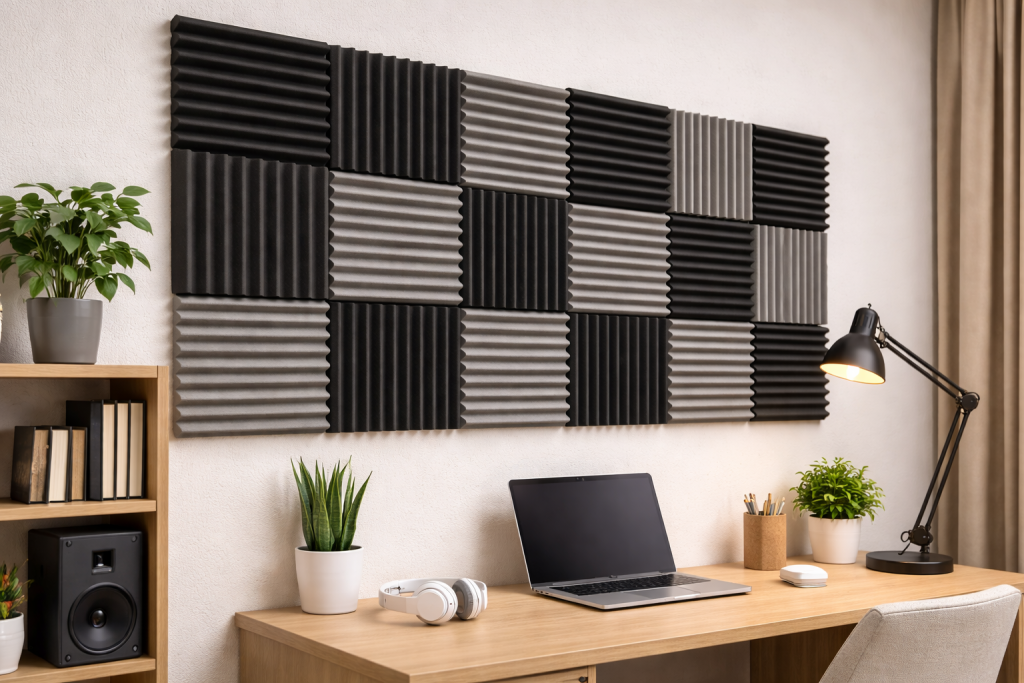
Removable foam panels are great for reducing echo and improving sound quality inside a room. They don’t completely block noise from entering or leaving, but they do help absorb sound and make the room quieter and less hollow. Many panels can be mounted with removable adhesive strips, making them renter-friendly.
If you want to know whether they’re actually worth using, read our full guide on do acoustic panels really work in apartments.
6. Furniture placement

Large furniture like bookshelves, couches, and wardrobes can help block and absorb sound, especially when placed against shared walls. A fully loaded bookshelf against a noisy wall can make a noticeable difference. This is one of the easiest and cheapest soundproofing tricks because it uses things you already own.
Cheap ways to soundproof a room
If you’re on a tight budget, you can still reduce a lot of noise using simple household items. Rolling up towels and placing them at the bottom of doors can block sound leaks. Hanging extra blankets or thick curtains over noisy walls or windows can also help absorb sound. Rearranging furniture to cover shared walls is another free and surprisingly effective trick.
What does NOT work (common myths)
Many people think egg cartons or thin foam panels will soundproof a room, but they don’t. Egg cartons do almost nothing for blocking noise. Thin foam only reduces echo inside the room and does not stop sound from entering or leaving. Also, “soundproof” blankets and cheap panels are often oversold — they help a little, but they won’t make a room silent.
How much noise reduction you can realistically expect
With no-drill, renter-friendly methods, you should expect noise reduction, not total silence. These methods can noticeably reduce voices, TV noise, and hallway sounds, but they won’t completely block loud bass or heavy footsteps. The goal is to make noise more manageable and your room more comfortable, not to build a recording studio.
Conclusion
Soundproofing an apartment room without drilling is totally possible if you use the right combination of methods. By sealing gaps, adding soft materials, and using smart furniture placement, you can significantly reduce noise without breaking your lease. Start with the cheapest fixes first and build up from there — even small changes can make a big difference.
Leave a Reply